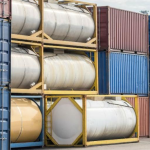
In South Africa, the humble shipping container has moved far beyond the port yard. From remote mining sites to crowded school grounds and residential backyards, these steel boxes are being converted into offices, classrooms, clinics, shops, and homes. The shift is not a passing trend. It reflects a practical response to the need for fast, durable, and adaptable buildings in a country where distance, climate, and urgent infrastructure demands shape how projects are delivered. This article explores why container-based construction is gaining ground for both temporary and permanent buildings, and what that means for construction companies, mining operations, schools, businesses, entrepreneurs, and property developers.
Speed, Mobility, and Cost Control: The Temporary Building Advantage
Temporary buildings are often the first place where shipping containers prove their worth. Construction companies need site offices, secure storage, ablution facilities, and worker canteens before permanent structures are ready. Mining operations in remote parts of South Africa require accommodation, clinics, and administrative space that can be deployed quickly and relocated when the project moves. Schools facing sudden enrolment growth or renovation work need classrooms that can be installed without years of disruption. In each case, container conversions offer a practical alternative to traditional brick-and-mortar construction.
The core advantage is rapid deployment. Because containers are manufactured off-site and fitted out in a controlled environment, much of the work happens before the unit reaches the project site. Once delivered, a container office or classroom can be operational in a fraction of the time needed for a conventional building. This matters in South Africa, where long travel distances and unpredictable site conditions can slow even well-planned projects. Modular steel structures also allow units to be stacked or linked, creating larger temporary complexes without a permanent footprint.
Mobility is another key factor. A container-based clinic or site office can be lifted onto a truck and moved to a new location when needs change. This flexibility suits mining operations that shift between shafts, construction companies working across multiple sites, and schools that require temporary classrooms while permanent facilities are built. It also supports businesses that need a pop-up shop or seasonal office without committing to a long lease. Prefabricated buildings of this kind are secure, weather-resistant, and robust enough to handle South African conditions, from dusty mining areas to coastal wind and rain.
Cost control is not simply about the initial purchase price. Temporary container buildings reduce on-site labour, minimise construction waste, and shorten the period during which a project carries overhead costs. They can also be refurbished and redeployed, extending their useful life across several projects. For construction companies, mining operations, schools, and businesses, this combination of speed, mobility, and reusability makes containers a compelling choice for temporary infrastructure.
Permanent Potential: From Container Homes to Community Infrastructure
While temporary use is well established, the more significant shift is the rise of containers as permanent buildings. With proper foundations, insulation, cladding, roofing, and interior finishes, a shipping container can be engineered to perform as a long-term home, office, classroom, clinic, or shop. This is not a matter of placing a steel box on the ground and hoping for the best. Container conversions for permanent use require careful design, structural assessment, and attention to local building requirements. When done properly, the result is a durable building that can rival conventional construction in comfort and appearance.
In residential settings, containers are being used for permanent homes, backyard flats, and small housing developments. The steel shell provides strength and security, while insulation and ventilation systems address temperature control. Modular steel structures can be stacked to create two-storey homes or combined side-by-side to form larger living spaces. For property developers and entrepreneurs, this modularity allows phased construction: start with one unit and expand as demand grows. For those exploring residential applications, resources on Shipping Container Homes South Africa can provide useful background on design and finishing considerations.
Beyond housing, containers are reshaping community infrastructure. Schools can add permanent classroom wings, administration offices, and ablution blocks without waiting for lengthy traditional builds. Clinics can be established in rural or underserved areas using prefabricated units that are designed for permanent use. Businesses can create permanent retail spaces, workshops, and offices. Mining operations can develop permanent accommodation blocks and administrative centres. In each case, the modular approach allows buildings to be configured around specific needs, then adapted or extended later.
The permanent use of containers also challenges the assumption that steel boxes are only suitable for short-term solutions. With architectural cladding, brick façades, timber finishes, or professional signage, a container building can blend into its surroundings or stand out as a modern statement. The key is to treat the container as a structural starting point, not a finished product. Engineers and manufacturers can design prefabricated buildings that meet the practical demands of South African users while offering a distinctive and efficient alternative to conventional construction.
Why South Africa Is a Natural Fit for Container-Based Construction
South Africa’s geography and economic priorities create a fertile ground for container-based building. The country is large, with many projects located far from major urban centres. Mining operations, rural schools, and construction sites often require infrastructure that can be delivered quickly and operated reliably in challenging conditions. Shipping containers are widely available through the country’s port network, and local manufacturers and suppliers, including Atlas Civils, a Dundee-based company serving customers throughout South Africa, are part of the growing capacity to convert and supply these units.
The climate also plays a role. From the heat of the Lowveld to the cold of the Highveld and the humidity of coastal regions, South African buildings must handle varied conditions. Container conversions can be insulated, ventilated, and finished to suit local climates. Modular steel structures are strong enough to withstand wind and weather, and they can be secured with appropriate locking systems. For mining operations and construction companies working in remote areas, this robustness is essential.
Schools and clinics benefit from the speed and adaptability of prefabricated buildings. A school can add a classroom block during the holidays, reducing disruption to learners. A clinic can be established in a community without waiting for a lengthy traditional build. Businesses and entrepreneurs can use containers for pop-up shops, permanent offices, or storage facilities that can be relocated if necessary. Property developers can test a market with a small container-based development before committing to a larger project.
The shift is also driven by a practical mindset. South African construction companies, mining operations, schools, businesses, entrepreneurs, and property developers are increasingly comfortable with prefabricated buildings and container conversions as mainstream options rather than temporary compromises. As design standards improve and local expertise grows, shipping containers are reshaping how temporary and permanent buildings are planned, delivered, and used across the country.